
The spending on a typical RT-PCR test would take up 23 per cent of the monthly income of an average Indian, compared to 2 per cent in China. This is one of the deepest cuts in the pocket of an individual, in comparison to 14 other countries, reports Abhishek Waghmare.

Since existing laws do not cover Covid-19, any compensation in this regard has to be left to the discretion of companies.

Chairman A M Naik said H2 of 2020-21 will herald better economic and business activity in terms of tendering, good liquidity, as well as revival of labour and supply chains.
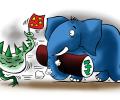
India's sourcing from China may not necessarily be for cost-effectiveness alone but also for the lack of domestic qualified bidders, technology or other know-how.
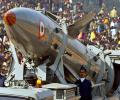
Free provision of food, cash transfers, and jobs in villages see enhanced flow of funds despite a precipitous fall in revenue. Till May, defence spend was nearly 30 per cent less than the previous year.
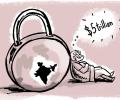
While seven companies bagged orders worth Rs 42,000 crore, industry experts said most of this new order activity was a spillover, and fresh project finalisation remains weak.
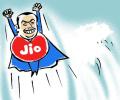
The COVID-19 pandemic and the ensuing lockdown may have put the best of funds on a backfoot of deal activity, RIL, however, has been an outlier. With 10 different investors brought in for its telecom venture Jio Platforms, RIL undertook 12 different transactions since April this year.

With RIL's market capitalisation crossing the Rs 11-trillion mark on Friday, Ambani is ahead of Google co-founders Larry Page and Sergey Brin, the 10th and 11th richest, respectively, and behind Zara founder Amancio Ortega on the Forbes Real-time Billionaires List.

'India should take up defence manufacturing in a more serious manner and encourage greater private participation.'

Govt has already approached World Bank seeking termination of contract. The progress of the project was just 20 per cent though the contract was awarded in 2016.

The demand for black oils and specialty products like fuel oil, bitumen, petcoke and sulphur has also shown marked improvement, facilitating increase of refineries throughput.

In a circular dated May 20, Sebi had directed the listed companies to evaluate the impact of Covid-19 on their capital and financial resources, profitability, liquidity position, assets, and ability to service debt. Instead, companies have spoken about the number of plants, warehouses and distribution centres that have resumed operations; work-from-home and safety measures undertaken for employees; and the labour shortage they are facing.
India's harsh lockdown has left companies grappling with temporary closure, chaotic supply chains and depressed demand. Consequently, business plans have been modified.

Several on-site labourers in the city want to take special trains being run to transport workers back home. The rising number of COVID-19 cases in the city has caused anxiety among them.

India's curve, yet to flatten vis-a-vis countries with similar or more conservative plans to ease restrictions, still points to 'exponential growth', despite India having tested much fewer people.

Of the 171 Mumbai scribes tested on April 15, 53 tested positive on April 20. Of the 53 tested positive, 31 were treated and discharged on April 26. A large number of positive cases and later a quick recovery within less than a week have baffled many. Amritha Pillay reports.

RIL's debt stood at Rs 3.06 trillion as of December 2019, against Rs 2.87 trillion in March 2019.

Experts say the focus is on preserving liquidity as there is uncertainty over the duration and impact of the 21-day nationwide lockdown imposed to check the spread of COVID-19.

According to sources, government officials have asked industry bodies and manufacturers to submit key concerns and requirements to begin manufacturing activity.

Retailers and multiplex operators want mall owners to either forgo rent for the period of the shutdown or lower rent in the event the mall is open but footfalls are low.
 © 2026 Rediff.com - Advertise with us - Disclaimer - Privacy Policy - Sitemap - Feedback - About us - Terms of use - Grievances